Kakadu National Park in Northern Australia is home to the largest crocodile population in the world. With tropical climate, freshwater rivers, estuarine habitats and coastal waters, this protected population of saltwater crocodiles (Crocodylus porosus) and freshwater crocodiles thrive in the park’s natural habitat.
But exactly how many crocodiles live in Kakadu National Park? Let’s get into the numbers, species of crocodile, best places to see them and why this croc country is a must-visit on your next Australian holiday.
Contents
Crocodile Population in Kakadu National Park

The estimated Australian crocodile population in Kakadu National Park is around 10,000 crocs. This includes both:
- Saltwater crocodiles (saltwater crocs) – Estimated 5,000–7,000
- Freshwater crocodiles (freshwater crocs) – Estimated 3,000–5,000
Saltwater Crocodiles (Crocodylus porosus) – The Big Boys
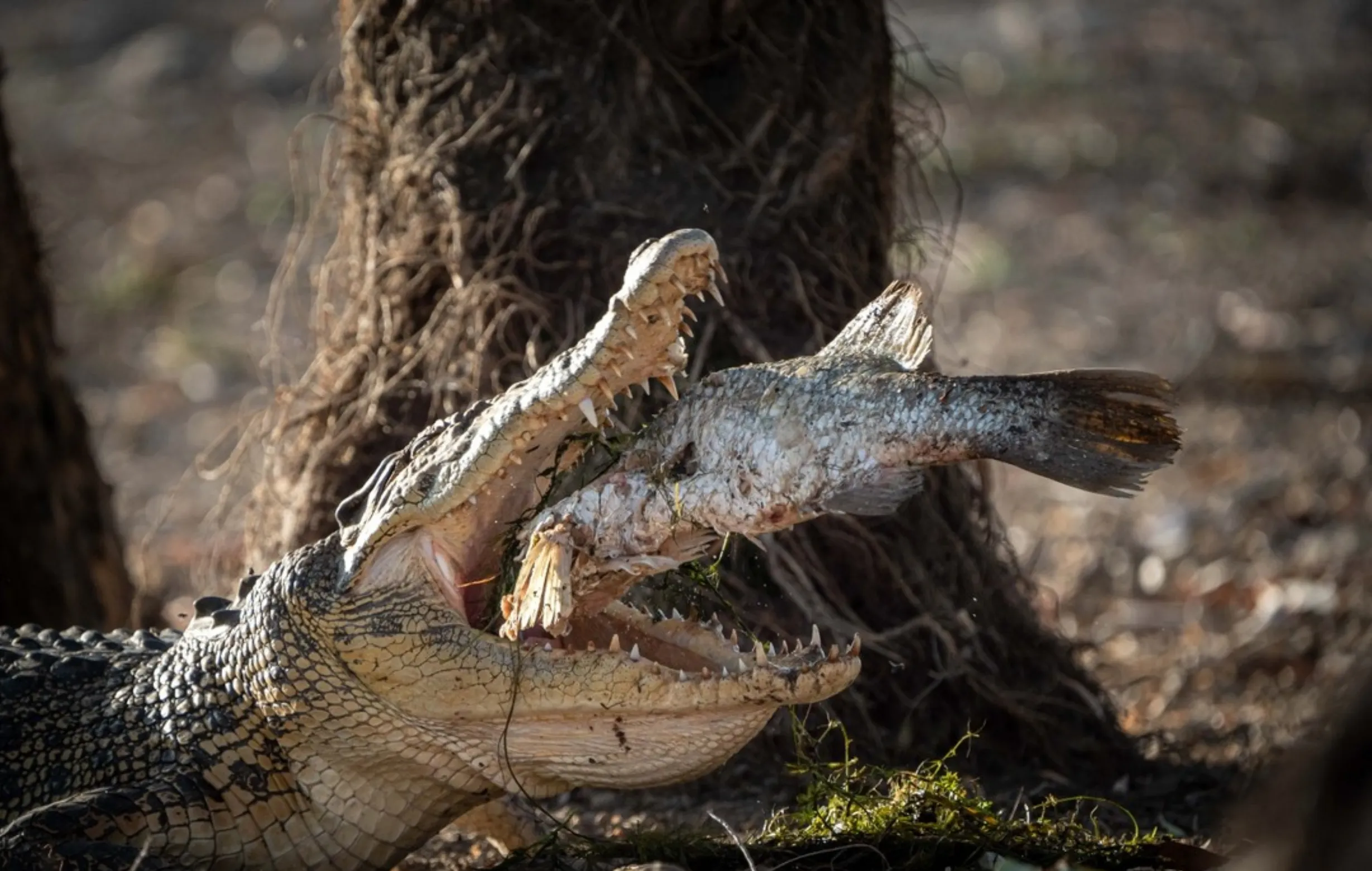
- Also known as estuarine crocodiles, big saltwater crocodiles are the largest crocodile species in the world.
- Grow up to 6 meters (20 feet) and weigh over 1,000 kg.
- Found in river mangroves, river banks, muddy water, fresh water and even coastal waters.
- Known for aggressive behaviour, they attack larger prey like wild boars, buffalo and even sharks!
Freshwater Crocodiles – The Little Ones
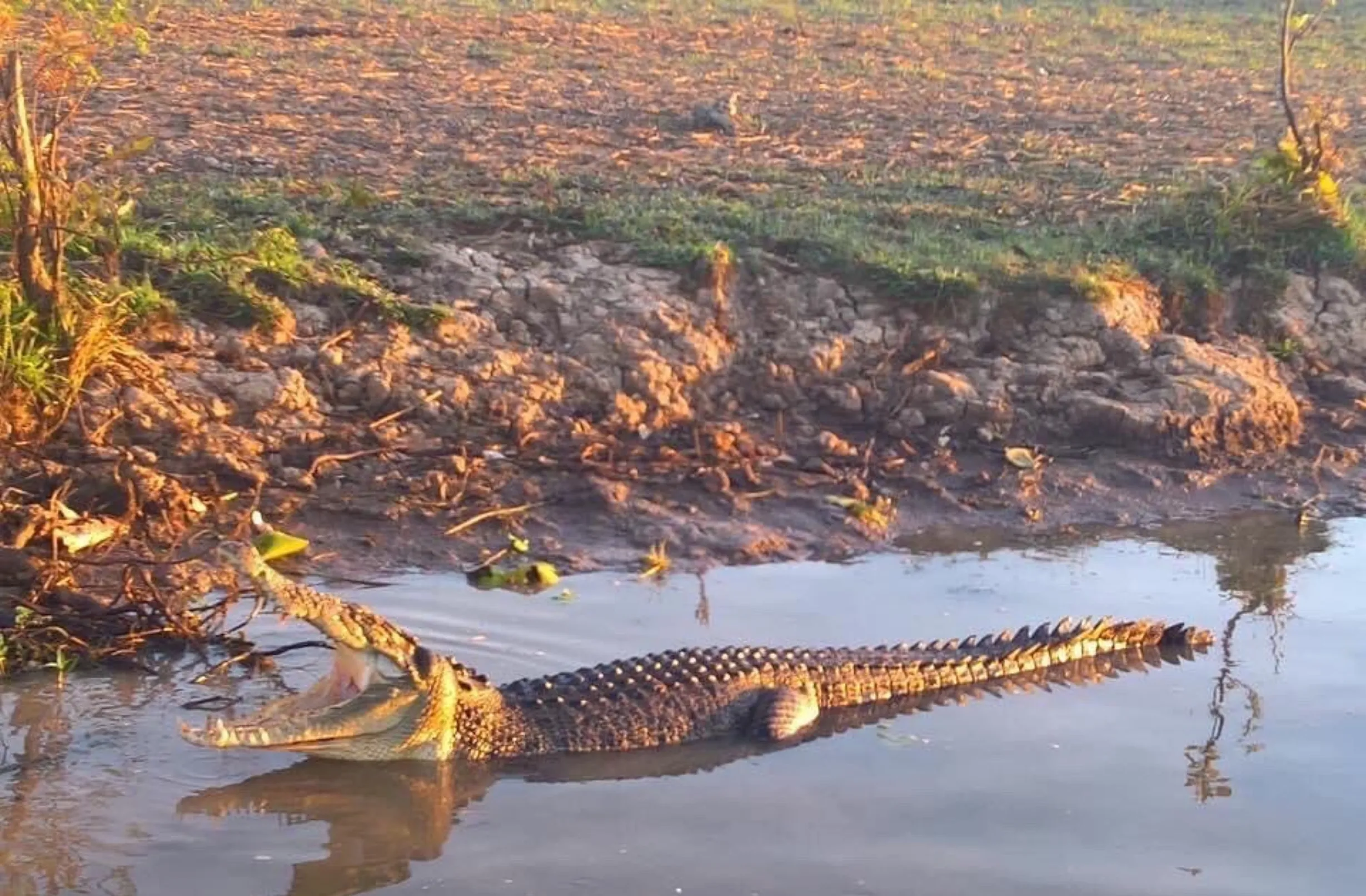
- Also called freshwater crocs or Saltwater cousins.
- Typically 2–3 meters (6.5–10 feet) in length.
- Less aggressive, feed on fish and freshwater creatures like frogs and insects.
- Found in freshwater rivers, croc habitats, water lilies and rock pools like Twin Falls and Jim Jim Falls.
Why Kakadu Has So Many Crocodiles

Kakadu’s croc native environment is perfect crocodile habitat. With hundreds of kilometres of wetlands, South Alligator Rivers, Mary River, and Adelaide River, crocs have plenty of typical prey and breeding season conditions.
Plus crocodile conservation efforts have allowed the healthy population of wild crocs to flourish after unregulated hunting nearly wiped them out before 1971. Today crocodile management supervisors and traditional owners work together to maintain a protected population.
Best Places to See Crocodiles
Looking for a crocodile experience? Here are safe and spectacular croc encounters:
1. Cahills Crossing – The Croc Feeding Frenzy
- Famous for its croc warning signs, this crossing over the East Alligator River is where big crocodiles congregate at high tide.
- Watch wild crocodiles hunting fish as they ride the tidal currents.
- Viewing platforms are a safe way to watch these prehistoric creatures in action.
2. Yellow Water Billabong – The Ultimate Croc Tour
- Home to Yellow Water lagoon, river cruises, and boat cruises with up close croc encounters.
- A top spot to see crocodile in person while enjoying a Yellow Water Cruise through stunning wetlands.
- Also home to venomous snakes, freshwater creatures, and exotic birds.
3. Mary River – Croc Hotspot
- Has one of the highest crocodile population in the world.
- Good if you’re also exploring Western Australia and Arnhem Land.
4. Nourlangie Rock – The Cultural Crocodile Connection
- Features ancient rock art of crocodiles and the Aboriginal person’s special connection to them.
- Learn about crocodile management and Indigenous traditions around croc experiences.
Understanding Croc Warning Signs
Yes, saltwater crocs are cold-blooded creatures with hunting behaviour that makes them one of the most dangerous predators in Australia.

- Deaths from crocodile attack occur when people ignore croc hazard signs.
- Croc warning signs are there—always follow them!
- Typical prey are fish, birds, mammals and humans if you get too close!
- These big crocodiles use scale patterns, sensory receptors and their incredible sense of smell to detect prey from kilometres on land or an hour in water.
Where can I go to safely see a crocodile up close?
For a safe crocodile encounter, go to:
- Yellow Water Billabong – A boat cruise where you can see crocs up close.
- Cahills Crossing – See crocs from safe platforms as they hunt for fish.
- Crocosaurus Cove (Darwin) – A controlled environment where you can observe and even dive with crocodiles.
Final Thoughts
With one of the largest crocodile populations in Australia, Kakadu National Park is croc country at its best. Whether you’re on a Darwin to Kakadu day trip, a river cruise or staying at the Crocodile Hotel, this park has got cultural experiences and crocodile experiences to remember.
For the ultimate crocodile experience, book a guided Darwin to Kakadu tours with Autopia Tours, for expert-led crocodile management adventures in Kakadu National Park and beyond. Whether it’s a 1 day Kakadu tours from Darwin or Kakadu tours from Darwin, their tours are safe and educational through croc country.
Frequently Asked Questions
How many crocodiles are in Kakadu National Park?
Kakadu National Park is home to an estimated 10,000 crocodiles, including 5,000–7,000 saltwater crocodiles and 3,000–5,000 freshwater crocodiles. This is one of the most croc-populated national parks in the world.
When is the best time to see crocodiles in Kakadu?
The dry season (May to October) is the best time to see crocodiles as the water levels drop and crocs congregate around remaining water sources. The wet season (November to April) is more challenging but river cruises can still offer great sightings.
Are crocodiles dangerous in Kakadu National Park?
Yes! Saltwater crocodiles are deadly and visitors should always follow crocodile hazard signs and avoid fresh water, river mangroves and muddy water. Fatal attacks have occurred when people ignored croc warning signs.
Can I swim anywhere in Kakadu?
Swimming in Kakadu National Park is highly dangerous due to the high number of crocodiles. However some safe swimming spots exist, Jim Jim Falls, Twin Falls and Edith Falls but always check for croc warning signs before getting in the water.
Where are the best places to see crocodiles?
Cahills Crossing, Yellow Water Billabong and the Mary River. Viewing platforms and boat cruises are the safe way to see crocs up close.